Lead Glass
HOME >Product > Lead Glass >
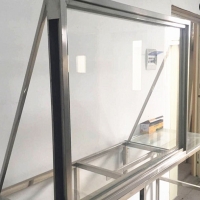
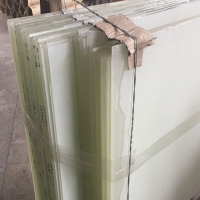
Lead Glass
Time
2025-12-10operate
ManufacturerClick
0Professional customer service online answers to solve any problems you encounter!
Related Products
RELATED PRODUCTSDetailed Introduction
Lead glass, also known as radiation resistant lead glass, is a special optical glass made from silicon dioxide as the basic raw material and melted with a large amount of lead oxide (PbO, usually with a content of 20%~80%). It combines the transparency of glass with the radiation shielding properties of lead, making it an indispensable protective material in fields such as healthcare, nuclear industry, and scientific research.
1、 Basic parameters and classification
The core component of lead glass is lead oxide. The higher the content of lead oxide, the higher the density, and the stronger the shielding ability against X-rays and gamma rays. The lead oxide content of common high lead glass can reach over 50%, with a density of about 4.0-6.2g/cm ³, which is 1.6-2.5 times that of ordinary glass (density 2.5g/cm ³).
Specifications
Thickness range: The conventional thickness is 10mm~200mm, and thickness is positively correlated with shielding ability. For example, 20mm thick lead glass can meet the protection requirements of conventional X-ray rooms, while high radiation scenes require a thickness of over 50mm.
Size specifications: Customizable sizes, commonly used standard sizes are 1000mm × 1200mm, 1200mm × 1500mm, and can also be cut into irregular parts (such as circular or curved) according to equipment requirements.
Transmittance: High quality lead glass has a visible light transmittance of ≥ 85%, ensuring clear observation and avoiding the impact of glass turbidity on medical diagnosis or experimental operations.
Common Categories
Types of Lead Oxide Content Applicable Scenarios
Low lead glass with 20%~30% weak radiation environment, such as dental X-ray machine protection
30%~50% lead glass for routine medical diagnosis, such as CT room and X-ray room observation windows
High lead glass 50%~80% high radiation scenarios, such as nuclear medicine, industrial testing, nuclear power plants
2、 Core Features
The lead atom number in high-efficiency radiation shielding lead oxide is high (82), which can effectively block and absorb ionizing radiation such as X-rays and gamma rays. When the radiation penetrates, it will interact with lead atoms, and the energy will be rapidly attenuated, thus protecting personnel from radiation injuries.
Good transparency is different from opaque protective materials such as lead plates. Lead glass can maintain a high visible light transmittance, which can protect against radiation and achieve clear observation. It is suitable for scenarios that require real-time monitoring, such as medical equipment observation windows and laboratory shielding windows.
Corrosion resistance and stability: Lead glass has stable chemical properties and a certain tolerance to weak acids and bases. It is not easily oxidized or deformed in conventional environments; But it is not resistant to strong alkali and hydrofluoric acid, so avoid contact with such substances.
Moderate mechanical properties: Lead glass is thicker and slightly more brittle than ordinary glass, with weaker impact resistance. It needs to avoid severe collisions and sudden temperature changes (to prevent explosions), and should be fixed with a dedicated frame during installation and use.
3、 Main purpose
This is the main application scenario of lead glass in the medical field, used to make observation windows, protective screens, protective masks, etc. for X-ray rooms, CT rooms, DR rooms, nuclear medicine disciplines, to ensure the radiation safety of medical staff and patients.
In the field of nuclear industry and scientific research, it is used for observation windows in nuclear power plant control rooms, observation ports for radioactive material storage containers, and radiation shielding windows in research laboratories to prevent nuclear radiation leakage.
In the field of industrial non-destructive testing (such as radiographic testing), protective observation windows are used to make testing equipment and protect operators from damage caused by testing radiation.
Protective windows for radiation screening equipment used in security and other fields, such as baggage screening machines at customs and airports, to prevent radiation leakage; It can also be used for isolation observation windows in special laboratories.
4、 Installation and usage precautions
Installation requirements
A dedicated lead alloy frame is required for fixation, and the joint between the frame and the glass needs to be sealed with lead rubber strips to prevent radiation leakage from the gap.
Avoid scratching the glass surface during installation, which may affect its transparency; Handle with care during transportation to prevent collision and damage.
maintenance
When cleaning, use a soft dry cloth or neutral cleaning agent to wipe. It is strictly prohibited to use strong acids, alkalis, or hard cleaning agents to avoid corroding the glass surface.
Avoid prolonged exposure to sunlight or drastic temperature changes (such as high-temperature baking or low-temperature freezing) to prevent glass from exploding.
Regularly inspect the glass for cracks or damage, and replace it immediately if any damage occurs to prevent radiation leakage.
safety protection
Although lead glass can shield radiation, lead dust will be generated during installation and cutting processes. Dust masks and protective gloves should be worn during operation to avoid inhalation or skin contact.
Abandoned lead glass belongs to hazardous waste and needs to be recycled and processed by qualified professional institutions. It is strictly prohibited to dispose of it at will to prevent lead pollution to the environment.

Product Inquiry
Please fill out the form on the left. Once we receive your message, we will contact you as soon as possible.
Contact