Lead Processed Parts
HOME >Product > Lead Processed Parts >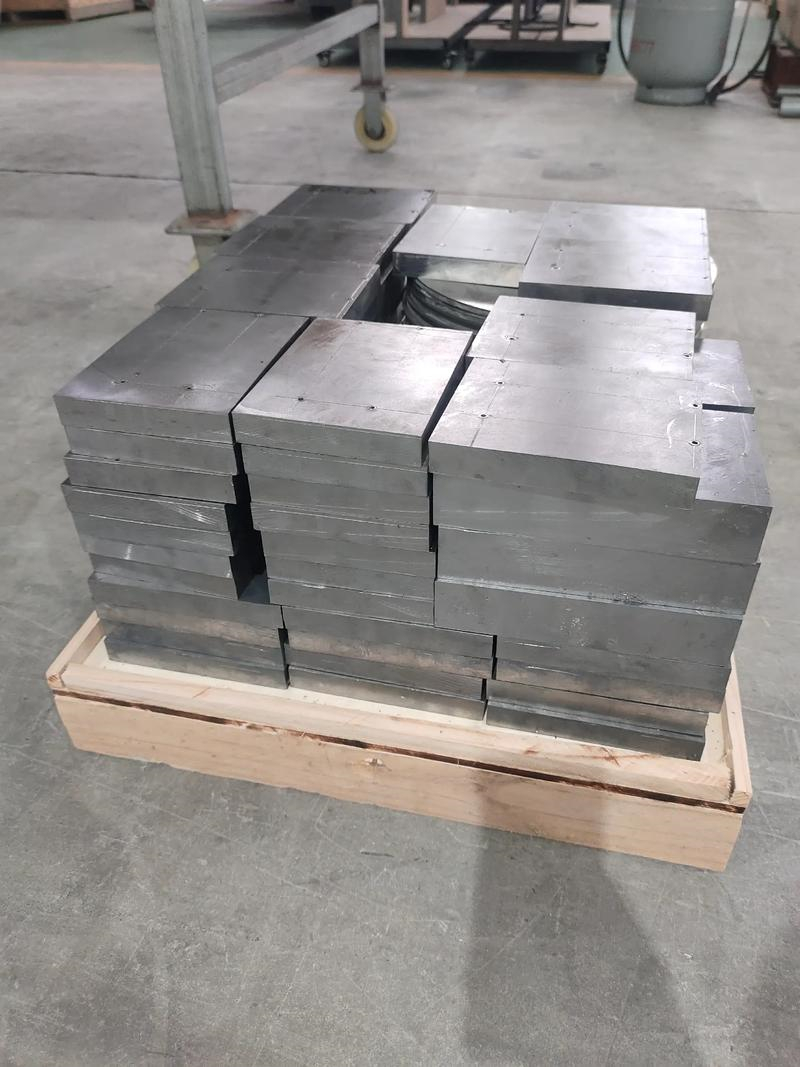
Lead Processed Parts
Time
2025-12-10operate
ManufacturerClick
0Professional customer service online answers to solve any problems you encounter!
Related Products
RELATED PRODUCTSDetailed Introduction
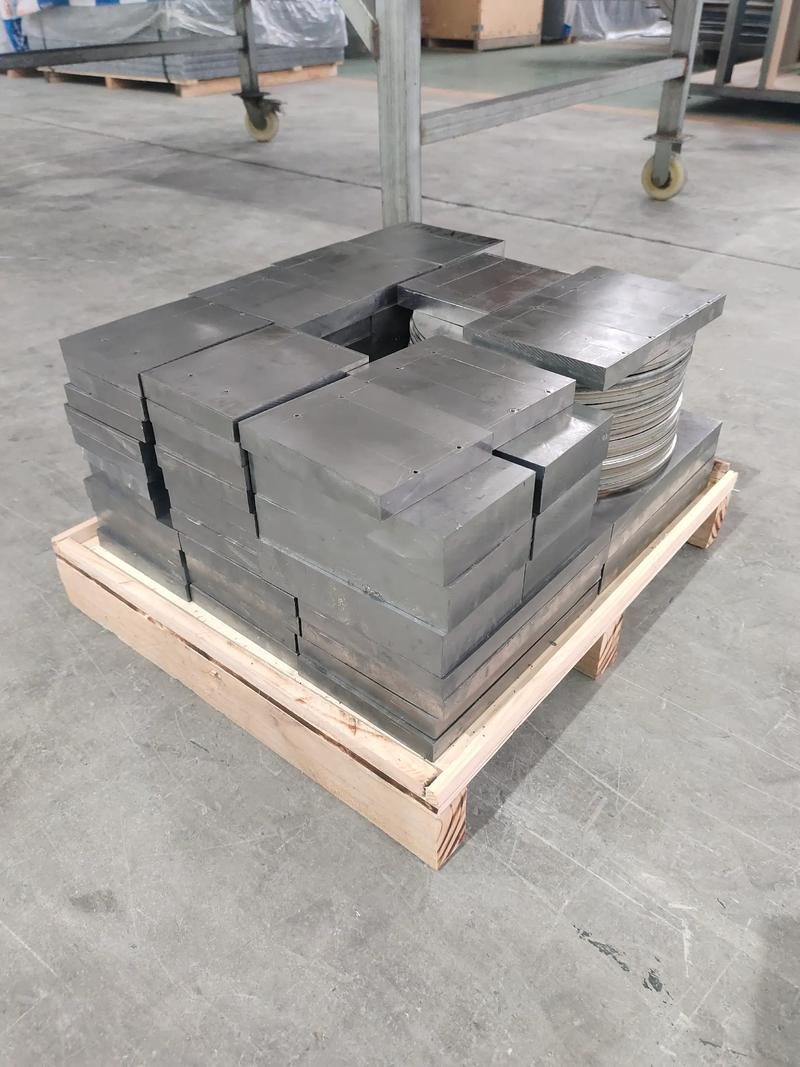
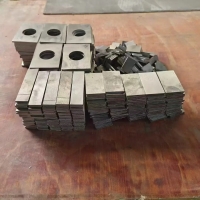
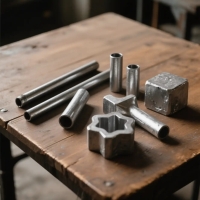
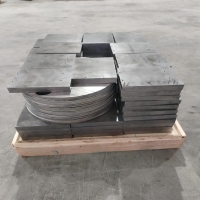
Lead processing parts are customized metal products made from 1 # electrolytic lead or lead alloy as raw materials, processed through melting, pouring, rolling, stamping, welding, cutting and other processes, covering various forms such as plates, pipes, shaped parts, counterweights, protective components, etc. It inherits the core characteristics of lead, such as high density, corrosion resistance, radiation shielding, etc., and is widely used in medical, nuclear industry, chemical industry, shipbuilding and other fields to meet the personalized needs of different scenes.
2. Main processing techniques
Pouring molding: Melting lead or lead alloy and injecting it into a mold, cooling it down to make large shaped parts (such as protective lead cans, equipment counterweights), suitable for non-standard size customization.
Rolling and stamping: Pure lead is rolled into lead plates and foils, and then processed into regular parts such as lead gaskets and lead cover plates through stamping technology, with an accuracy of ± 0.1mm.
Welding assembly: Using hot melt welding or argon arc welding technology, lead plates and lead pipes are spliced into large protective structures (such as CT room protective walls and nuclear waste storage boxes), with strong weld sealing and no risk of radiation leakage.
Cutting processing: Precision machining such as turning, milling, drilling, etc. is carried out on the cast or rolled lead blank to produce mechanical parts with precise dimensions (such as lead valve cores and instrument counterweights).
Surface treatment: Some lead processed parts can be treated with oxidation or spray coating to enhance surface corrosion resistance, or coated with stainless steel (such as lead plates wrapped in stainless steel) to improve aesthetics and durability.
2、 Common types and specifications
The shape and specifications of lead processing parts are completely customized according to customer needs, and common types include:
Protective processing parts
Form: Radiation protection door, protective window frame, lead screen, lead tank, lead box, radiation protection partition.
Specifications: Thickness of 5mm-300mm, customizable size (maximum processing length of 10m, width of 2m), shielding ability can be designed according to radiation intensity.
Counterweight machining parts
Form: Ship ballast block, elevator counterweight block, crane counterweight, fishing gear sinker, sports equipment counterweight.
Specification: The weight ranges from tens of grams to several tons, and can be processed into square, circular, and irregular shapes. The density can reach 11.34g/cm ³, and the weight distribution accuracy is high.
Chemical anti-corrosion processing parts
Form: Lead tank liner, acid resistant pipeline, valve, pump body accessories, reaction kettle lead liner.
Specification: Pipeline diameter 20mm-500mm, tank lining thickness 10mm-50mm, able to withstand strong acid corrosion such as sulfuric acid and hydrochloric acid.
Precision machined parts
Form: Lead gasket, lead electrode, lead wire coil, instrument parts.
Specification: Thickness of 0.1mm-5mm, dimensional tolerance of ± 0.05mm, suitable for high-precision scenarios such as electronics and medical equipment.
3、 Core Features
High degree of customization: It can be processed according to customer drawings or samples to meet the non-standard size and shape requirements of different industries, and is suitable for special equipment and scenarios.
Excellent radiation shielding performance: Lead has a high atomic number and can effectively absorb X-rays and gamma rays. The shielding effect of processed parts can be precisely controlled by adjusting the thickness and raw material purity.
Strong corrosion resistance: not easily oxidized or corroded in strong acid, strong alkali, and humid environments, with a service life of up to 10-20 years (depending on the usage scenario).
Good processing performance: pure lead texture is soft, easy to bend and weld; Lead alloy has high hardness and can be processed into high-strength parts, balancing practicality and durability.
High density and good stability: Under the same volume, the weight far exceeds that of metals such as iron and aluminum. When used as a counterweight, it can provide stable balancing effect and is not easily displaced.
4、 Main application areas
Medical radiation protection: protective doors, walls, lead screens, and lead tanks for storing radioactive drugs in hospital CT rooms, X-ray rooms, and radiotherapy departments.
Nuclear Industry and Research: Shielding Components for Nuclear Power Plant Control Rooms, Nuclear Waste Transfer Boxes, Laboratory Radiation Shielding Devices, Radioactive Material Storage Containers.
Shipbuilding and Machinery Manufacturing: Ship ballast counterweights, elevator counterweights, crane counterweights, and shock-absorbing counterweights for precision instruments.
Chemical industry: acid resistant tank liner, sulfuric acid pipeline, lead anode for electroplating equipment, anti-corrosion accessories for chemical reaction vessels.
Other fields: Lead waterproofing membranes for ancient building repairs, lead sheet fillers for sound insulation engineering, radiation screening door components for security equipment.
5、 Processing and usage precautions
Processing safety protection
Lead dust and lead vapor are generated during lead processing. Operators should wear dust masks, protective gloves, and goggles to avoid direct skin contact and inhalation of lead dust.
The processing workshop needs to install forced ventilation equipment, regularly check the lead content in the air, thoroughly clean hands and faces with soapy water after operation, and strictly prohibit eating in the workshop.
Installation requirements
When installing protective lead processing parts, it is necessary to ensure that the joints are tight and sealed with lead rubber strips to prevent radiation leakage; Large counterweights need to be firmly fixed to avoid displacement.
Lead processing parts used in chemical industry should be kept away from strong corrosive substances such as hydrofluoric acid, avoid long-term contact with strong alkali, and prevent surface damage.
Storage and maintenance
Lead processed parts should be stored in a dry and ventilated warehouse, with a raised bottom (at least 10cm from the ground) to prevent moisture and oxidation; Avoid mixing with acids, bases, and salts.
Regularly inspect the surface for cracks, deformation, and corrosion. If any damage occurs, it should be repaired or replaced in a timely manner; Protective processing parts need to be regularly tested for shielding performance.
Environmental Protection Treatment
Abandoned lead processing parts are classified as hazardous waste and must be disposed of by qualified professional recycling institutions. Random disposal is strictly prohibited to prevent lead pollution of soil and water sources.

Product Inquiry
Please fill out the form on the left. Once we receive your message, we will contact you as soon as possible.
Contact